
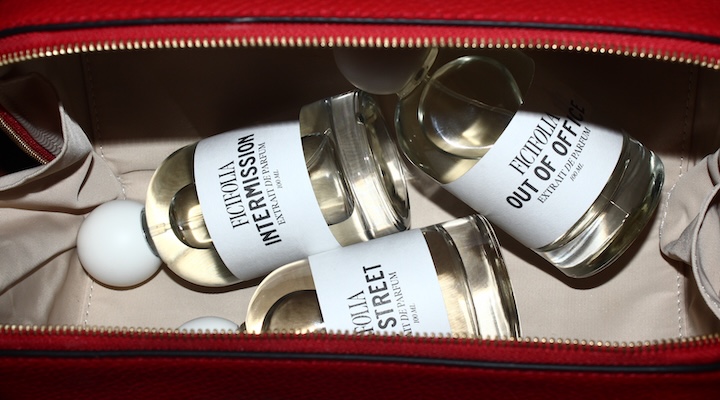
Australia’s fragrance market is growing steadily, but its shelves still tell mostly European stories. Ficifolia is betting that modern Australian life – laneways, late trains, Fitzroy pools – deserves an olfactive canon of its own. A market with global scale, but few local narrators Australia’s fragrance and perfume market reached an estimated value of about US$732.97 million in 2025 and is projected to grow to roughly US$1.09 billion by 2035. Yet despite this steady expansion, Australia
tralian-made perfume houses remain notably scarce, particularly in the premium and niche segments. Even at Mecca, the country’s most influential prestige beauty retailer, Troye Sivan’s Tsu Lange Yor is currently the sole Australian fragrance brand on its shelves, underscoring how little homegrown scent storytelling has broken through at scale.
For Sophie Marcoux, founder of Ficifolia, this disconnect between market size and local representation became impossible to ignore once she began seriously exploring scent. “I could smell Paris, the Amalfi Coast or Morocco but I couldn’t find anything that reflected my own life,” she told Inside Retail. “I felt Australia wasn’t being represented in fine fragrance in a contemporary way… Not to mention it was impossible to find a perfume house telling modern Australian stories.”
From missing category to “modern Australian perfumery”
Marcoux’s response was Ficifolia, a Melbourne-born perfume house built around Australian cities and the memories attached to them, launched with an explicit brief to “celebrate our cities and our nostalgia with the same level of sophistication that international perfume houses have.” Where European maisons lean on centuries of heritage, Ficifolia is trying to codify a new, distinctly Australian idea of luxury: considered, but unpretentious. The brand is rooted in shared rituals like knock‑off drinks on the Yarra or a certain laneway’s mood rather than in postcard clichés.
She now describes Ficifolia less as a mid-price compromise and more as an accessible entry point to niche perfumery. “Designer fragrances can feel polished but somewhat formulaic,” she said. “Niche perfumery is where the most exciting creative work is happening but can feel inaccessible or impractical for everyday wear. Ficifolia brings the sense of creativity and craftsmanship of niche perfumery into fragrances that are distinctive and emotionally engaging yet marketable.”
Reverse‑engineering Australian life into scent
If traditional houses start with a pyramid of notes, Ficifolia starts with stories. The brand’s launch collection, for example, translated specific “Melbourne” vignettes into extrait de parfum: laneway bars, Brunswick Street markets, the charged quiet of intermission at a theatre. “Every fragrance starts with a concept rather than a list of notes,” Marcoux explained. She has olfactory synaesthesia – she experiences scent as colour – so each brief begins with a moodboard of colours, references and scenes, which she then takes to a team of perfumers.
From there, the process becomes iterative and unusually collaborative for such a small house. Perfume submissions are evaluated against that original mental palette; she knows a scent is finished when the colours she smells align with the colours she first imagined. Only once a formula feels right does she hand it to a trusted “board” of friends and peers to stress‑test its wearability: “While the creative vision is instinctive, I think it’s important to ensure the final scent resonates with the people we’re creating it for and is as wearable as it is distinctive.”
Building a cinematic world on a bootstrapped budget
Despite being self‑funded, Ficifolia has quickly developed a visual and experiential universe that feels unusually cohesive for a young indie brand. Campaign imagery, packaging, pop‑ups and even customer service sit inside a single, cinematic frame: that of an imagined “modern Australia” that’s stylish without being grandiose. “Packaging, photography, copywriting, events and even customer service have never felt like separate pieces because they’re all connected,” Marcoux said.
Her background in creative industries – and years spent volunteering with stylists, photographers and events teams – means she can execute much of that world herself, outsourcing only when specialist expertise is non‑negotiable. Operating constraints have become a creative prompt for the brand. “I know I can’t outspend the big brands, so I have to out‑think them,” she said, positioning Ficifolia as a brand that “feels much bigger than the resources behind it.”
Selling scent in a digital‑first, story‑first way
In a category that still leans heavily on in‑store trial, Ficifolia has had to work harder than its global peers to build trust online. Marcoux concluded early that customers “wouldn’t buy from Ficifolia because they already knew exactly how it smelled, they needed to buy into the stories first.” The brand’s content strategy accordingly stretches beyond perfume into adjacent worlds – fashion, beauty, travel and culture – inviting audiences into a lifestyle as much as a product.
Offline, the brand’s pop‑ups and trade‑show activations function as both trial environments and community hubs. They provide what Marcoux calls “an in‑store experience, online” in reverse: customers discover the stories on social media, then step into them IRL through immersive events that often feel closer to gallery installations than standard counters. Her Flight Deck discovery sets – trademarked, redeemable sampler kits that double as gifts and travel vials – have also become a defining format, and one increasingly echoed by other brands in the category.
Guarding a fragile white space
In a landscape where celebrity scents and global luxury giants continue to dominate, Ficifolia is wagering that the real “white space” lies not in yet another gourmand or flanker, but in new cultural narratives and formats. “There are thousands of beautiful perfumes, but comparatively few brands creating original cultural narratives, or pushing the category forward through scientific and application‑led innovation,” Marcoux argued. Her ambition is to see Ficifolia recognised as “the benchmark for modern Australian perfumery” – a brand that helped define what local fragrance could be, both creatively and commercially.