
The 2026 financial year results for retailers listed on the Australian Securities Exchange were a mixed bag but arguably better than might have been expected. Most retailers have managed the challenges of the last financial year and the early months of the new year with changes in strategy and store networks and increased reliance on technology to curtail operating cost pressures. Financial results indicate that the promising consumer confidence and spending of the first half of FY 2026 for many
r many retailers were dashed by a much more subdued second half.
Key factors in the second half that impacted on retail sales were rising fuel costs, interest rate increases, retreating housing values, inflationary pressures on households and Federal Government budget measures.
While there was an immediate financial impact on households from most of these factors, the underlying problem is fragile consumer confidence.
The most recent National Australia Bank (NAB) survey of consumer sentiment indicated that eight in 10 respondents reported higher living costs.
The increased costs prompted 54 per cent of respondents to reduce car use and 28 per cent to miss health visits while others trimmed food and liquor spending, eating out and entertainment.
The ANZ–Roy Morgan Consumer Confidence Index fell 3.4 points to 67.1 in the week ending 4 October 2026, following the Reserve Bank of Australia’s September interest rate increase.
The Westpac–Melbourne Institute Consumer Sentiment Index fell 5.2 per cent to 84.4 in September, leaving it almost 12 per cent below its level a year earlier.
That reflects a finding that 40 per cent of Australian households believe they are worse off financially now than last year, with real wages failing to match, let alone better, higher living costs.
The NAB Consumer Stress Index indicates stress remains above its long-run average, with 70 per cent of respondents blaming cost of living increases and 82 per cent claiming their household costs rose in the past three months.
While trading conditions have been difficult for major retailers and national chains with pessimistic consumers focused on promotional events and bargain hunting, the market has been catastrophic for many independent stores.
According to the Australian Securities & Investments Commission, 9,300 companies entered external administration in the year to 28 February 2026, a 76 per cent increase on the previous five-year average, which incidentally takes us back to the Covid-impacted years.
The main industry sectors with companies in financial difficulty were in retail, hospitality, logistics and construction.
The external administration figure of 9,300 doesn’t include business owners who simply closed their doors and walked away, predominantly in retail and hospitality, or those informally trying to restructure or find new equity investors.
CreditorWatch reports that 12 per cent of cafés, restaurants and takeaway food businesses closed in the 12 months to July 2026, almost double the national average.
Well-known retail brands that have entered administration and have either attempted to restructure, migrate to online platforms or simply shut up shop in the past year include Barbeques Galore, Aussie Disposals, Betts, Lincraft, Cheap as Chips, Stateside Sports, Geedup and Proud Poppy.
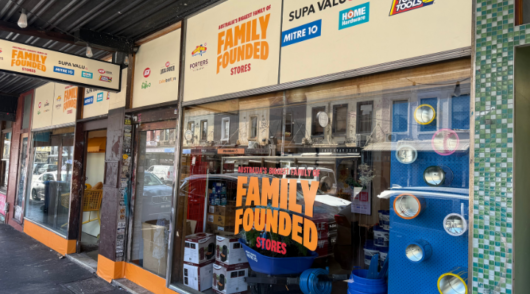
For many retailers across all categories, most strip centres have become struggle street while many secondary and tertiary shopping centres are suffering declining foot traffic.
Both the strips and non-prime shopping centres suffer from an unappealing or poor tenancy mix as well as vacant shopfronts, sparse marketing and lack of investment in the centre or individual stores.
Retailers in strip centres are also contending with the additional problems of prioritised traffic over parking and pedestrian movement and poorly designed or maintained public spaces that are increasingly perceived as unsafe by shoppers.
Certainly, the outlook for retailers of all sizes in FY2027 suggests economic conditions may get worse before they get better.
The latest ANZ–Roy Morgan reading reinforces the picture of weak consumer confidence as retailers prepare for the Christmas trading period.
The pessimistic outlook is no doubt shaped by geopolitical issues globally as well as increasing debt levels across Federal and state governments and rising unemployment that might be exacerbated by AI impacting on jobs.
Obviously, inflation and the increased cost of living are top of mind as taxes increase, mortgage or rent commitments rise along with the impact of higher energy, health, education and fuel costs.
The latest estimates of mortgage stress indicate more than 36 per cent, or 1.3 million households, are currently struggling to meet their financial commitments. The Reserve Bank of Australia raised the cash rate by 25 basis points to 4.60 per cent on 29 September 2026.
The timing of any interest rate relief remains uncertain. Meanwhile, government tax and policy changes have prompted a $34 billion fall in the value of residential property across the nation and a retreat by investors that has limited rental supply.
With the growth in real wages not keeping up with inflation and the other concerns weighing on the minds of Australians, the brakes on consumer spending seem likely to persist outside major promotional periods such as the Black Friday sales.
Consumer uncertainty and fears about their financial security are just one factor dragging down business confidence and expectations for trading through this financial year.
The cost of doing business is surging with inflation, higher wages and entitlements for staff, occupancy costs, taxes, red tape compliance, supply chain volatility, the impact of crime in stock losses as well as higher insurance costs and security measures.
The Fair Work Commission’s decision to phase out junior pay rates for eligible employees aged 18 to 20 in the retail, fast food and pharmacy sectors will increase wage costs as the changes are introduced from December 2026. Payday super, which started on 1 July 2026, also brings forward employers’ superannuation payments, adding to cash-flow pressures.
As cash flow is under pressure, the Australian Taxation Office is continuing its pursuit of outstanding tax debts, which are now around $54 billion. Around $36 billion was owed by 1.3 million small businesses in the 2025 financial year.
Tax debts dating back to the Covid years have been a significant factor in retail failures.
Physical retail is not at death’s door and is not all doom and gloom, but it is currently trapped in a perfect storm that makes it more challenging than ever before for all retailers from the minnows to the majors.
Further reading: Acom International acquires Barbeques Galore, names CEO