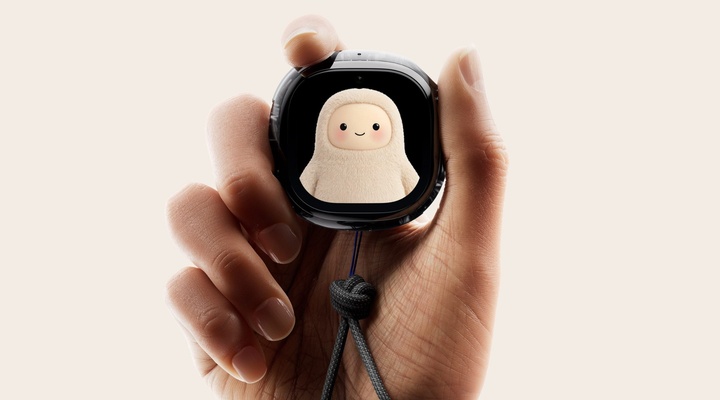
Last month, Facebook’s parent company, Meta, introduced Muse, a next generation “personal assistant” that can not only recommend products to purchase but also complete the transaction within the same chat. Several retailers, including Gap and Sephora, have already integrated the tool into their systems. However, others, including Amazon, have blocked it, citing privacy concerns. Critics are asking whether we can really trust AI agents not to give away humans’ personal information, or eve
even whether the internet – designed for humans, not bots, remember – can cope.
Melissa Minkow, CI&T’s global director of retail strategy, said Meta’s entry into agentic commerce is noteworthy, but questioned whether Muse is poised to take over.
Many shoppers are warming to AI as a research tool, but few feel comfortable letting it handle their spending.
“Trust is the number one factor causing resistance, and while Meta has a leg up in the sense that it’s a brand consumers are already using for messaging, it will have to work hard to earn sufficient trust for agentic commerce,” said Minkow. “That said, the mission of Muse aligns with what our data shows consumers want to use this technology for, which is finding the best prices and comparing items.”
Is Muse poised to be the next big shopping tool?
Barney Stacher, CEO of consultancy Retail OCD, told Inside Retail that Muse could become an important shopping tool, but the test is whether it makes buying easier. “A clever conversation still has to end with the right product arriving,” he said.
Stacher added that Gap and Sephora’s integrations are promising because apparel and beauty shopping requires more than price comparison. Beauty customers often reorder favourite products, a relatively simple task for Muse. In fashion, the tool could help shoppers select products by understanding fit, sizing and availability. Amazon’s decision to block Muse presents another major obstacle.
“The shopper’s permission and the retailer’s permission are separate issues,” said Stacher. “Amazon authorisation and security concerns. My view is that there is also a commercial tension over who owns discovery, recommendations and the customer relationship.”
He also echoed Minkow’s concerns about consumer safety.
“Consumer hesitation is understandable,” he said. “Letting AI find three good options is a smaller leap than letting it spend your money or share personal information. Adoption will depend on accurate product data, dependable transactions, understandable permissions and a clear answer to “Who fixes this when it goes wrong?””
Stacher said Meta should build on its stated purchase-approval safeguards with plain-language controls, spending limits and clear explanations of recommendations and any commercial influence. Muse should confirm stock, total cost, delivery and return terms, preserve loyalty benefits, and make it easy to reach a person.
“Muse’s opportunity is to remove the tedious work of shopping while preserving the shopper’s judgment,” said Stacher. “Consumers want less homework, with the final say.”
Neil Saunders, managing director at Globaldata, also said Muse is a long way from becoming the next big shopping tool.
“While I think Muse is interesting, it is far too early to say whether it is the next big thing in retail,” said Saunders. “There’s a huge difference between an initial buzz and sustained interest that leads to a tool becoming fully embedded. We are also at the very early stages of agentic commerce and Muse won’t be the only solution that’s offered to consumers.”
Saunders said expectations that agentic commerce will become the mainstay of purchasing are misplaced. Most retail sales still take place in physical stores rather than on digital platforms.
“The idea that all these in-person purchases are going to transition to agentic is fanciful,” said Saunders. “Where we will see AI play more of a role is in discovery and ideation, rather than just in the direct buying process.”
Like Stacher, Saunders said Amazon’s absence would be a major disadvantage for Muse. It remains a leading destination for online shopping, with many customers drawn by its range and the fast, free delivery available to Prime members.
Where does Muse go from here?
Frankie Margotta, strategy director at consulting firm Triptk, agreed with Stacher and Saunders that it is too early to tell whether Muse will become the next big shopping tool.
“Versions of this kind of AI-assisted commerce have existed for some time, and I expect them to remain part of the shopping experience in some capacity,” said Margotta. “From a branding perspective, though, Muse represents a more significant shift.”
That shift combines the utility of an AI-powered tool with anthropomorphisation and gamification of AI itself.
“An empty chat box is effectively a blank canvas,” said Margotta. “Depending on the headlines someone reads, they can project enormous promise or enormous peril onto it. Give that technology a character, personality and sense of play, as we’re seeing with Muse and OpenAI’s Dots, and it starts to feel less abstract and threatening. It can become familiar, fun, perhaps even charming.
“As a branding device, it can be incredibly effective. The combination of a more approachable identity and growing social adoption can lower the barrier to trying Muse for less consequential tasks, like shopping.”
The challenge for Muse comes after initial adoption. It must remain substantially useful, or the novelty will quickly wear off. Meta will also need to be more transparent about how the technology evolves and how the data it captures is used. Still, Meta’s scale across platforms and devices already gives Muse an enormous advantage.
“When consumers have several capable AI companions to choose from, Meta needs to establish why people will continue to choose Muse,” said Margotta.
Further reading: Meta says it has taken down 756,000 Australian teen accounts