
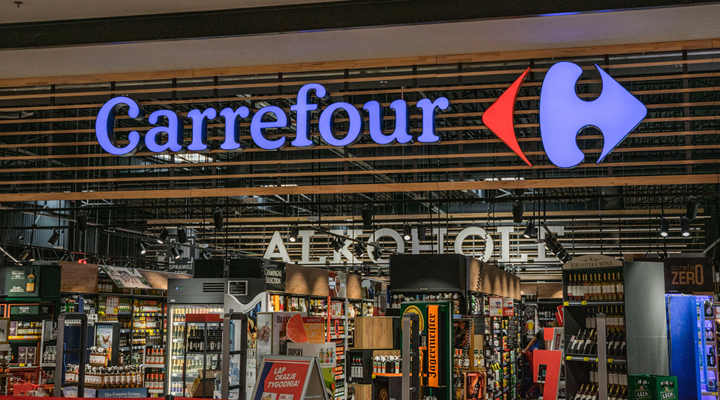
At Super U in French commune Mirepoix, an alarm summoned managers at 2am, but the emergency refrigeration engineer arrived at 6am. In Gradignan, a delivery driver discovered Intermarché’s flooded storeroom at 4am. In central Paris, a resident watched the frozen-food aisle empty onto a Paris street, with melted ice cream spilling from broken tubs onto the pavement. This was a literal liquidation of stock. Hackers raised refrigeration temperatures across hundreds of French supermarkets earlier
er this week, with Les Mousquetaires reporting about 300 stores affected and temperatures reaching 50 degrees Celsius overnight for six hours. Everything affected was discarded.
French prosecutors reported food losses and fires whilst Intermarché CEO Thierry Cotillard estimated losses of “tens of millions of euros nationwide in a single day”. Sekoia analyst Felix Aime said the attack also affected Spain, Portugal, Poland, Germany and Belgium.
For Australian supermarkets, the scene offers a macabre example of how a refrigeration failure can affect not only stock, but also staffing and the day’s trading, putting the responsibility of supermarket managers to organise repairs and replacements while at the same time, explaining the depleted shelves to shoppers.
How is supermarket refrigeration managed?
University of Queensland Cyber Research Centre director Ryan Ko made a point that retailers need to know their equipment and who can access it. Yesterday he told the ABC that once inside, cyber hackers can change temperature set points across many locations at once. His explanation also identified compromised credentials, suppliers and vulnerable remote-access services as possible entry routes.
A supermarket fridge’s exposure depends partly on how its controls connect to the outside world. Where those controls are accessible through the public internet, weak security can give attackers a way in to tamper with temperatures and wreak havoc on operations.
This was demonstrated in 2015 when researchers hacked a Samsung smart fridge at a hacking conference and intercepted internet traffic passing through it, showing that keeping a connected fridge operational also means keeping its software secure.
Running outdated firmware
Danfoss, the Danish company supplying refrigeration controls used by several affected French supermarkets, said the units “were running outdated firmware”. Reuters reported that French authorities also found affected equipment using Copeland and Dixell software, while the exact method of compromise remained undisclosed.
Although the attacker’s route remains unsolved, both an old controller and a maintenance arrangement deserve investigation. It’s a discrepancy that may be of crucial importance when diagnosing Australian exposure.
At RMIT, professor of mathematics and cyber security Asha Rao says Australian supermarkets need to consider how an attack could interrupt everyday operations. “Disruption of services is the name of the game,” she told Inside Retail. Refrigeration and other connected equipment warrant their own risk assessments, including checks for default passwords that have been left unchanged. Rao recommends the Australian Signals Directorate’s Essential Eight as a starting point for reviewing security, with business continuity central to the exercise. “Food is a critical sector, just as water, electricity and health.”
Australia’s responsibilities
Woolworths, Coles, Aldi and Metcash help keep Australia’s cupboards stocked, a role the Department of Home Affairs recognises as essential to Australia’s food supply. These food and grocery networks must therefore report cyber incidents and maintain written plans to identify and manage risks.
In its April 2023 submission, the Australian Retailers Association called for stronger cybersecurity training, simpler incident reporting and government support for affected businesses.
“Doing risk analysis of these systems is essential to be able to continue operating,” Rao said. In Mirepoix, refrigeration was eventually restored at 9am, but €90,000 of stock had already been lost. In Gradignan, owner Charles Dezon documented the damage “A bailiff came to confirm it: we lost €21,000 at purchase price,” he told Le Monde.
Back home, preparedness, even with stronger cybersecurity defences, comes down to the overnight essentials: someone to answer the alarm, staff who can check temperatures and isolate affected controls, and a plan for deciding what is still safe to sell when morning shoppers arrive.