
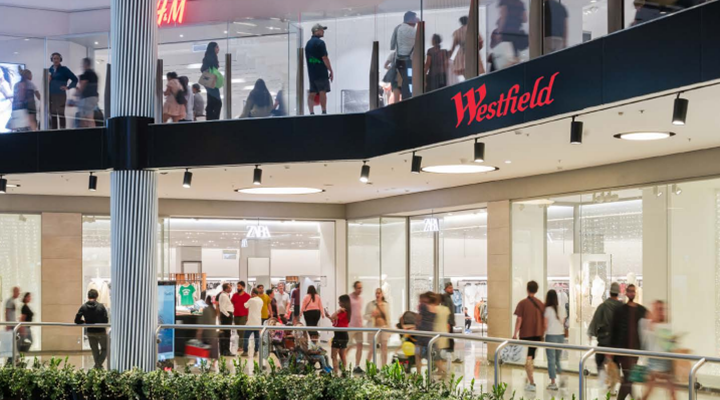
Scentre Group, the owner and operator of 42 Westfield shopping centres across Australia and New Zealand, has begun recalibrating its vast land portfolio for residential development, reflecting a major structural shift in how retail property is leveraged. In a recent market update, Scentre Group emphasised the potential of its sites to supply significant housing. The company has already secured rezoning approval at Westfield Hornsby in Sydney and Westfield Belconnen in Canberra, unlocking oppor
opportunities for more than 2100 and 2000 dwellings. In March, Westfield Warringah was also declared a state of significant development, with the potential to add 1500 dwellings.
Chief executive Elliott Rusanow said that the group’s strategy to “attract more people to our Westfield destinations and to unlock long-term growth opportunities from our strategic land holdings is expected to continue to deliver ongoing growth in earnings and distributions.”
According to ABC News reporting from December last year, the potential redevelopment at Westfield Hornsby has been particularly significant, with planning rules allowing for towers up to 53 storeys and the NSW government aiming to deliver thousands of new homes in the area.
Profitability and resilience
From a property economics perspective, integrating residential towers with retail centres changes the investment equation.
“Residential integration fundamentally transforms the financial profile of retail assets by maximising land utilisation and creating multiple revenue streams from a single holding,” Don Foulds, national director of retail advisory at Charter Keck Cramer, explained to Inside Retail.
“However, the actual air rights value is typically discounted to make these projects viable.”
Foulds said that with acquisition costs now sitting more than 30 per cent above replacement value in many cases, developers are under pressure to extract greater returns from land.
Residential towers, he noted, provide that opportunity through vertical integration, while also delivering an already built-in resident population that supports consistent foot traffic for retail.
This dynamic assists in the reduction of volatility and strengthens tenant performance in essential categories, creating financial resilience.
The structural shift
Some observers might see residential development as a defensive move against sluggish retail growth. Foulds, however, disagrees.
“We’re witnessing an evolution in how retail real estate is conceptualised, moving from stand-alone destinations to integrated community hubs that align with broader urban densification trends and changing consumer expectations,” he said.
“This isn’t an untested concept. We have proven examples dating back 30 years ago with developments like Acland Court Shopping Centre in St Kilda and Northcote Plaza, both in Victoria, which demonstrate the long-term viability and positive community outcomes of retail-residential integration,” he added.
Foulds said the momentum behind retail and residential integration comes from multiple pressures, including rising construction costs that make single-use retail harder to justify, consumer demand for convenience and community connection and planning authorities now favouring mixed-use projects.
He stressed that this is less about reacting to short-term conditions and more about securing long-term viability, with mixed-use developments likely to become the norm.
The centres that thrive, he added, will be those that can flex with changing retail formats while doubling as core community infrastructure.
What it means for retailers and communities
For tenants, this shift alters the dynamics of operating in a shopping centre. According to Foulds, the evolution creates its own set of opportunities and challenges.
Weaving residential into retail precincts could effectively build a permanent customer base, offering retailers a steadier flow of foot traffic, which would be particularly advantageous for services catering to everyday needs.
However, he added that success requires adaptation. Store formats and trading hours must evolve to reflect the rhythms of a resident community rather than the habits of occasional mall visitors. In this model, shopping centres are less enclosed retail boxes and more round-the-clock neighbourhood hubs, blending health care, gyms, education and coworking alongside traditional shops.
“Traditional discretionary retailers in these environments must provide stronger experiential offerings to justify their space, as the focus shifts toward retailers that genuinely serve the daily needs of an integrated residential community,” he said.
A long-term payoff
Scentre Group’s strategy highlights how retail assets are being future-proofed against market headwinds.
“What Scentre Group is pursuing with developments like Westfield Hornsby and Belconnen represents astute capital allocation. By leveraging prime real estate holdings to deliver thousands of residential units, Scentre is positioning itself at the intersection of two critical market needs, retail modernisation and housing supply,” Foulds reinforced.
“This creates significant value creation opportunities, future-proofing their retail assets against changing market dynamics, while adding much-needed housing.”

![A headshot image of Hannah Mercer wearing a purple hoodie against a gray background. ]\\](https://insideretail.com.au/wp-content/uploads/2025/10/hannah-mercer-gymshark-530x294.jpg)


