
Thibault Henry spent part of the pandemic trying to get groceries to Australians swiftly. Then his grocery delivery start-up, Voly, closed in 2022 and he found himself preoccupied with something less cooperative – furniture. Henry had been buying and selling good furniture online for years and knew the routine well. You could find exactly the piece you wanted in a few minutes, but getting it into your home was another matter entirely. After the “crazy world” of quick commerce, Henry has fo
s found a retail problem worth solving.
His answer is Bazaa, an online furniture resale marketplace with its own vertical logistics arm. Founded in 2024 with Aria Wigneswaran, a former Depop Asia-Pacific director, Bazaa combined her marketplace pedigree with Henry’s operations and fundraising experience.
The business began as a curated marketplace for high-quality pre-owned pieces, then added the full apparatus of an app, including offers, messaging and delivery. It’s an interesting correlation between a casual community marketplace and a niche online furniture store.
“We wanted to feel like you’re actually buying something online, as you would have with anything new,” Henry told Inside Retail. By FY26, Bazaa had extended that idea beyond the marketplace, launching Passage, its wholly owned logistics arm, to handle the awkward business of getting large, one-off pieces from one home to another.
Particularly after the covid-19 pandemic, Australians hardly needed convincing that somebody else’s furniture might be worth buying for themselves. In 2022, Gumtree estimated the value of Australia’s second-hand economy had almost doubled over the previous decade, while Facebook Marketplace recorded a 72 per cent increase in second-hand listings in the first half of that year alone.
Among the things Australians were searching for most were couches and coffee tables, which makes perfect sense until you remember that a coffee table is considerably easier to click on than it is to collect from a stranger’s garage three suburbs away. The resale market appetite was already there, but what remained difficult was everything that happened between spotting the desired piece and getting it into the house.
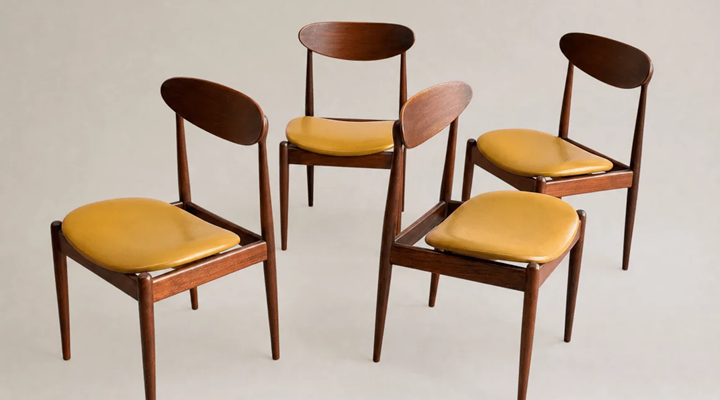
Bazaa carries close to 10,000 one-off pieces, with hundreds added each day. Henry said the business rejects around 30 to 40 per cent of incoming listings. “Picking the right sellers, picking the right products is very important to create that whole look and feel,” he said.
Henry realised early on that whether they sold a vase for $30 or a sofa for $5,000, the chances of needing customer service after that were the same. “So we wanted to really start Bazaa by focusing on better products that people actually desire, and where people actually know what they’re buying.” Bazaa’s average order value has since reached $1,600 in FY26, up from $1,000 a year earlier.
The Good Chairs
Around 20 per cent of purchases now come from interior designers buying for clients, giving Bazaa a professional constituency alongside homeowners. Henry sees more buyers, sellers and delivery volume can make the logistics network far more productive.
One of Bazaa’s more serendipitous offshoots tends to the office-bound. The company began selling enough second-hand office chairs to launch its vertical business, The Good Chairs, and Henry estimates office seating now contributes 15 to 20 per cent of sales. He said the demand comes from home workers seeking ergonomic brands at 50 to 60 per cent of their new price, as well as companies scrutinising fit-out budgets. “You are breaking your back with a bad chair. So you want the good stuff,” Henry said. He also pointed to commercial buyers seeking hundreds of serviced chairs at once, turning corporate surplus into inventory with another working life.
Henry’s longer game is larger than a handsome corner of online resale; he wants Bazaa to become one of Australia’s biggest furniture players, with the marketplace, curation and Passage, its wholly owned logistics arm, functioning as a single retail organism.
He believes the model could eventually travel to Europe or the US. Bazaa’s wager is that circular consumption grows faster when shoppers are asked to do less.
“We have people that arrive on Bazaa just because they see something that seems like really good value,” he said. “They weren’t really looking to buy second hand, they see something that looks like great value and seems like it’s in amazing condition, they try it and then they definitely come back.”