
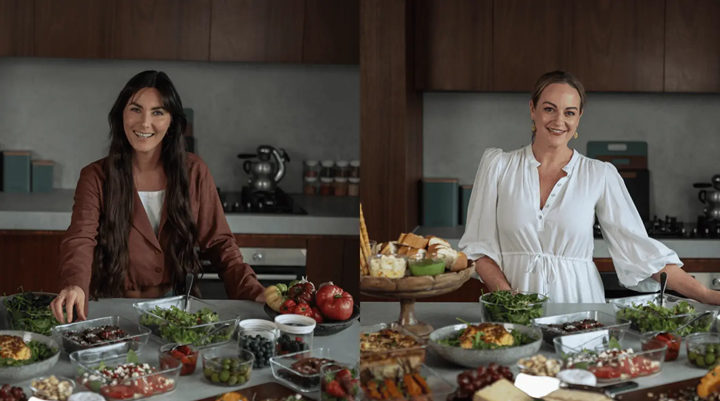
Rebecca Williams arrived at Seed & Sprout in 2022 when the Northern Rivers-born sustainable homewares brand was confronting what she describes as “dire finances, no clear strategic direction and a culture that needed rebuilding”. Four years later, the business, founded a decade ago by Sophie Kovic, boasts over 450 products, sells into 50 markets and is tracking $30 million in annual revenue. The turnaround has, against all odds, been marked by inflation, interest rate rises, and progre
gressively exacting consumer expectations in the retail world.
Williams boasts a noteworthy career trajectory, comprising senior leadership roles at organisations such as Mercedes-Benz Australia and Flat Chrysler, where she led marketing, brand and commercial strategies. Speaking with Inside Retail, she reflected on the commercial discipline that strongly supported the company’s expansion, the enduring value of customer trust and why a real problem solved well, genuine quality and trust earned over the years, remains the most durable formula in modern retail.
IR: You took the helm of Seed & Sprout in 2022 at the beginning of a Covid-19 hangover and shortly after the devastating Northern Rivers floods – certainly a turbulent moment for retail. What did you feel the business needed most when you arrived?
RW: When I arrived, the business was in trouble. Dire finances, no clear strategic direction and a culture that needed rebuilding. What it needed was commercial expertise paired with a leader willing to do the hard, unglamorous work and to inspire a turnaround.
That meant making tough commercial calls, steadying the foundations and bringing people on the journey so they believed in where we were headed. There was no single “silver bullet”. Just real commercial rigour, a lot of long days and nights and a team to graft alongside me.
IR: Sustainability branding has become pretty saturated over the last few years. How do you keep Seed & Sprout feeling genuine and useful to consumers, opposed to being overly curated or aesthetic-led?
RW: Saturation is a thing, lots of aesthetic-led greenwashing dressed up as purpose. The dead giveaway [is that] these brands have no soul, no faces behind the company, no real story, ambiguity around their operations and they’ll happily ship you a “sustainable” product wrapped in plastic.
Our difference is that we go deep where others cut corners: we own the full supply chain impact and hold ourselves to the highest certifications and standards – LFGB, FDA, rigorous testing, factory audits. It takes real time and investment, but it delivers quality, and quality builds long-standing trust.
Everything is designed locally by our product team with 6+ years of hard-won expertise. They don’t chase trends. They solve real problems, and every product has to work, last, and earn its place in someone’s home. And we deeply know our customer, because we listen.
The honesty runs deeper than me. Sophie set that tone nine years ago when she founded the company. Progress over perfection is in our DNA. It’s a core principle, not a marketing line.
IR: Seed & Sprout has grown into a business spanning more than 450 products across 50 markets. How do you expand at that scale without losing the original philosophy the company was built on?
RW: Our guiding principle is to scale sustainably, which makes us ruthless on waste in every corner of the business, from financial through to environmental. Plastic-free shipping is a perfect example: you can imagine other brands quietly dropping it to cut costs or move faster. For us, it’s not even on the table. We made the commitment, we hold it, and we keep hunting for better options.
Our philosophy is our differentiation. To walk away from that in the pursuit of scaling would be to lose not only our competitive advantage but our DNA. It’s that heart that attracts top talent and keeps customers advocating for us. Across 450-plus products and 50 markets, every product is held to strict guardrails. The brand identity Sophie built doesn’t get diluted by scale – it gets amplified. It’s on all of us to do the hard work to protect it.
IR: You’ve led the business through post-pandemic retail conditions, inflationary pressure and the aftermath of a natural disaster affecting the region the company calls home. Did that period permanently change your approach to leadership?
RW: It’s been an interesting time to lead a turnaround! The ground constantly shifted – rate rises and cost-of-living pressure squeezing our margins and our customers’ wallets at once.
I steered the business through distinct phases, leaning on my corporate experience and peers who’d walked similar roads. You don’t have to carry it alone. The real skill was adapting what I knew to the situation in front of me. Adaptive leadership has always been my strength, and this honed it like nothing else.
In hindsight, the turnaround we delivered simply isn’t normal; it’s exceptional. Triple-digit growth, two financial years running, in that climate, doesn’t happen by accident.
IR: How have you seen the mindset of the customer evolve over the past few years?
RW: Today’s consumer is savvy, researching everything from materials and certifications to health studies before they buy. Cost-of-living pressure has only sharpened that: when every dollar has to work harder, people do their homework.
We see it as our job to meet them there. Education is central to what we do, helping people understand why a product lasts and what real sustainability looks like versus the spin. That’s not soft work: an educated customer converts better, returns more often, and recommends you.
And that recommendation is everything. Word of mouth is our most efficient growth lever – it costs nothing and outperforms any ad. But here’s what competitors miss: it’s built on trust, and trust can’t be bought or shortcut. You earn it over years. That makes it the hardest thing in our business to replicate and the most valuable.
You see it in the numbers: brand awareness is up 30 per cent, even as the market got noisier and tighter. And it compounds, durability earns trust, trust earns the recommendation, and the recommendation drives growth we don’t pay for.
IR: You’re approaching your first $20 million year during a time when many digitally native brands are struggling. From your perspective, what separates brands that endure from brands that capture a moment?
RW: We’ve actually already had our first $20 million year, and we’re now just shy of $30 million. That figure’s from an older forecast. We’ve consistently overachieved. I don’t say that lightly. In this market, a run like that is rare, and I don’t take it for granted.
Which is exactly why this question matters to me. Brands that capture a moment run on borrowed attention, a trend, a viral hit, paid acquisition. The growth is fast, but it’s rented, not owned; when the trend moves or the ad budget tightens, the momentum goes.
Brands that endure are built on what you can’t shortcut: a real problem solved well, genuine quality and trust earned over years. That’s not glamorous, it’s product discipline, adaptability, operational backbone and financial rigour. That rarely trends on social media but keeps you standing when others fade.
It’s also why we’ve deliberately diversified how we grow, rather than betting the business on one channel. While domestic DTC has delivered triple-digit FYTD growth, the deliberate work has been building beyond it. Wholesale has more than tripled FYTD, and International DTC is on track for around 55–60 per cent YoY growth, organically, despite significant headwinds.
And it’s knowing exactly who you are. Moment brands chase every trend; enduring brands have an identity and the discipline to stay true to it. For us, that’s the philosophy Sophie built, and we protect it fiercely.


