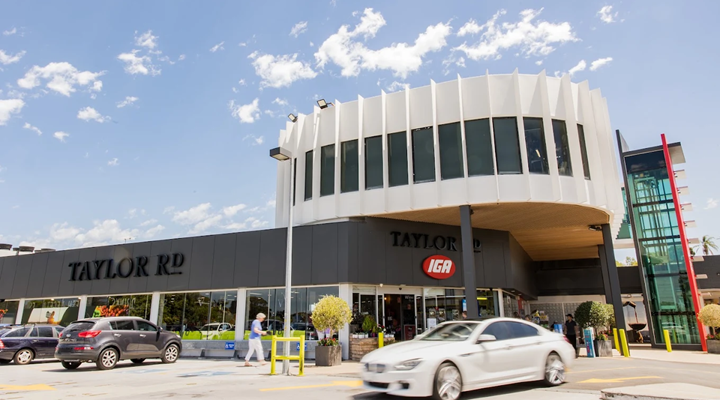
Just two weeks ago, At Taylor Road IGA in Nedlands, ‘Kelly’s IGA’, CCTV showed at least a dozen Woolworths employees in branded uniforms walking the aisles, taking photos and apparently studying displays. Their visit came only weeks before Woolworths is due to open a new 4000sqm full-line supermarket at Nedlands Square, 900 metres away. “Just taking in your beautiful store because we need to see how we can beat it and be better than you”, the group leader said, according to store manag
anager Steve Booker. Working thirty-five years in retail, owners James and Rita Kelly said they had never seen anything like this before.
The long aisle
Still, retailers checking up on retailers is hardly new. At the ACCC’s supermarket inquiry in 2024, Coles CEO Leah Weckert said the company used regular “in-store checks” to monitor competitors, and in a 2011 Senate hearing, Woolworths’ former general manager of fresh foods, Pat McEntee, said the company had “a central manner in which we check competition prices on a regular basis”.
The habit is old, but what made Nedlands new was the sight of a large uniformed group doing it in full view and totally conspicuously. Investigator “Chad E” of Periscope Investigations said on LinkedIn: “There’s a way to do competitive intelligence. This isn’t it.” Woolworths told 9News it expected team members to be respectful and would review the visit internally.
For Lisa Asher, a retail academic researcher at the University of Sydney Business School, the interest Woolworths has shown in the store also says something about the competitive strength of independents in Western Australia. “IGA understands their local shoppers in that community,” she said. “In-store design would be tailored to that knowledge, but also assortment and service play a big role.”
It’s a familiarity that’s difficult to reproduce from head office. “The fact that store owners are often present in stores is a real point of difference. When staff know their shoppers’ names, this has a real impact on service delivery.”
The ACCC estimated that Coles and Woolworths accounted for 67 per cent of national supermarket retail sales based on FY23 revenue, compared with 7 per cent for Metcash-supplied independents, like Taylor Road IGA.
The ACCC’s supermarket inquiry also described the double marginalisation that can arise when wholesaler and retailer each need to earn a margin, while an integrated chain captures both functions within one business. “They’ve got the money and the power, and they’ve got the resources,” Rita said. Asher points to buying power as a challenge, although she argues WA’s strong independent network gives IGA more bargaining power.
Location and leverage
Australia isn’t the first grocery market to discover that supermarket competition can be fought through property as well as prices. Britain has dealt with the problem for decades. A 2008 Competition Commission inquiry found that local market concentration and incumbent grocers’ control of land could restrict competition, eventually producing rules limiting large supermarkets’ ability to use land agreements to keep rivals out. Those rules remain relevant, as recently as 2023, when UK regulators took action against Sainsbury’s and Asda over more than 30 anti-competitive land agreements.
The ACCC found Coles and Woolworths hold advantages in securing supermarket sites because of their size and financial resources. Since 2019, the pair have acquired an estimated 260 sites, including stores, land and shopping centres – the regulator was notified of only 14.
Western Australia supplied a prominent example in July when the ACCC blocked Coles from acquiring a lease for a second supermarket in Kalgoorlie-Boulder, concluding the proposal could lead to the exit of an effective independent competitor. Deputy chair Mick Keogh said independents provide meaningful choice across service, quality, range and some prices.
What disappears
Alongside their complaint to the ACCC, the Kellys are renovating the store and leaning into the areas where they believe they can compete. “We’re adding more fresh. We’ll work harder and sell more local stuff than they do,” James said.
Asher sees that freedom of assortment as one of the independent model’s strongest defences. “IGAs have the power to stock brands and products which are not mandated by head office, and this is a real point of difference, where they can also support local goods too.” James worries about those businesses as well. “We’ll survive, but it’s that small guy we worry about. Be it the strawberry guy or the country guy that fuels up the truck as he comes through, they’re just chipping away.”
When an IGA disappears, “part of the buying power for IGA in that state disappears”, Asher said. The question now is whether different kinds of supermarkets can still compete once the opening specials are gone. Booker told The Australian the Woolworths visit felt like “they were just making themselves known, their presence”. Five awkward minutes in a grocery aisle made that imbalance quite apparent.