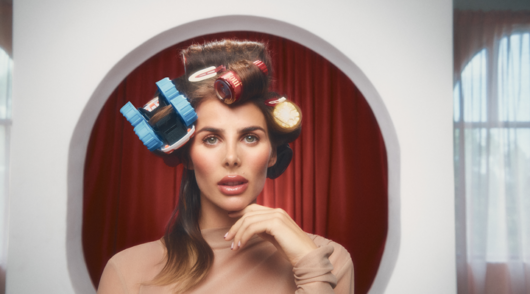

Motherhood has long been treated as something to be managed behind closed bathroom doors and in late‑night Google searches, rather than a life stage that deserves the same design, service and storytelling standards as beauty and fashion. In Australia, two former beauty executives turned co‑founders, Kate Casey and Phoebe Simmonds, are betting that if you bring those standards into parenting retail – and say the quiet, uncomfortable parts of postpartum recovery out loud – you not only bui
ld a powerful brand, you also move the dial on women’s health.
From ‘baby stuff’ to seeing the mum
When Casey and Simmonds started exploring the parenting category, what struck them wasn’t just the volume of product but the absence of the person it was ostensibly for. “We looked at the industry and all we saw was baby stuff – and a lot of it,” Simmonds told Inside Retail. “We didn’t see experience. We didn’t see empathy. We didn’t see identity. We didn’t see understanding, or representation, or even an acknowledgement of motherhood.”
In the marketing and merchandising of baby goods in Australia, what dominated were images of “perfect families and sweet babies”. The reality of early parenthood – sleepless nights, cracked nipples, postnatal depression and anxiety, mastitis, prolapse – was almost entirely absent from the shelf. “Where was her experience?” Simmonds asked. “None of it was being talked about because retailers were just selling. They weren’t focusing on education, community or connection.”
The Memo, their omnichannel parenting retailer, was created to address that gap: a business designed not just to sell prams and pumps, but to surface the unvarnished realities of matrescence and wrap them in empathy, information and a sense of belonging. As The Memo grew, so did their proximity to their community’s stories – and to their own postpartum experiences – which eventually gave rise to Due, a “solutions‑driven” postpartum care line that makes bleeding, leaking, pain and recovery visible on the pharmacy shelf.
Designing brands that speak out loud
From the outset, both founders were clear that the language and design of Due products would be central tools in dismantling postpartum shame. In a category where packaging has historically leaned on euphemism and floral illustrations, they chose to be blunt, warm and occasionally funny about the purpose of the products.
“Part of the historic concealing of motherhood has been adopted by brands that use flowery imagery and words,” Simmonds said. “You can read a box three times and still not really understand what a product is for.” For a new parent trying to synthesise advice from midwives, friends, doulas and the internet, that opacity is more than an annoyance; it is another layer of cognitive load in an already overloaded moment.
“With everything else going on, all this information you’re trying to take in, why should you also have to decipher a nipple shield?” she posed. “We wanted to be clear and direct in our packaging, but also celebrating their matrescence. We want women to feel supported, proud and celebrated in this transformative time.” That philosophy shows up in product names like Belly Glide, Nip Magic, Peri Cloud and After (Pants) Party – titles that are both disarmingly literal and disarmingly light.
Due’s aesthetic is intentionally bathroom‑shelf ready: bold, contemporary, unembarrassed. These are not products meant to be tucked away in a drawer. They are designed to signal to the person using them – and anyone sharing the space – that postpartum care is legitimate, expected and worthy of design attention in its own right.
Turning closed‑door conversations into product
One of the most striking things about the Due range is how tightly it maps to the unglamorous, often improvised workarounds that mums have traditionally been offered. Casey draws a direct line between her own hospital experience a decade ago and the briefs that now drive the brand’s innovation pipeline.
“When I first gave birth 10 years ago, midwives offered frozen condoms for swollen perineums and cabbage leaves for mastitis,” Casey shared with Inside Retail. “With Due, we wanted to create products that are fit for purpose and for us.” The goal, she says, was twofold: “Products that offer dignity and support, of course, but also a celebration of the super incredible feat they have just accomplished: carrying and birthing a baby.”
Instead of repurposed household items or makeshift hacks, Due’s range offers targeted solutions like Peri Cloud for perineal relief, Booby Soothers for breastfeeding discomfort and After (Pants) Party for bleeding and leaking. Each one is grounded in the reality of behind‑closed‑doors conversations – the sort of frank admissions that surface in group chats, mothers’ groups and DMs, but rarely in mainstream retail. By turning those conversations into briefs, the brand pushes the category away from generic ‘new mum’ gifting and towards specific, evidence‑informed care.
The data behind a ‘hidden epidemic’
The problems The Memo and Due are tackling aren’t anecdotal. In July 2025, an ABC Australia report drawing on a major NSW Birth Trauma Inquiry found that one in three Australian women experience birth trauma, often reporting “unacceptable” care including lack of consent, denied pain relief and poor diagnosis of physical injuries. The inquiry resulted in 43 recommendations and described a “hidden epidemic” of physical and psychological trauma.
On top of that, through The Memo’s charity partnership with Mum Walk, the team knows that 90 per cent of mums report feeling lonely after birth and one in five will develop postpartum depression or anxiety. “And then of course, we talk to our customers and hear their intimate experiences, which need to be addressed with empathy, education, solutions…and social change,” Simmonds stated.
In that context, retail becomes more than a channel; it becomes a lever. “In our work, we’re always trying to share stories of different experiences and perspectives of motherhood, so our community, and society as a whole, can understand how critical care for mums really is,” she said. For Casey and Simmonds, bringing motherhood out of the shadows isn’t just a brand tagline; it is about insisting that the economic and social systems around pregnancy and postpartum recognise the complexity of the experience.
Building a growth story around mums
Investors have taken notice. The Memo has just raised a $20 million minority round from Pier 12 Capital, off the back of about 40-45 per cent growth and a growing network of boutiques. When they walked into those capital discussions, Simmonds was determined to make one thing clear. “That mums mean something to society, and the economy!” she exclaimed.
Framing the business in those terms matters when you are asking for growth capital in a category often dismissed as niche or sentimental. The founders’ thesis is that early parenting is a recurring, high‑value lifecycle moment that touches not only individuals but workplaces, healthcare systems and consumer markets. By positioning The Memo as an omnichannel “mecca” for this stage – with retail, education, services and now an owned brand extending into pharmacy – they are making the case that the addressable market is substantial and underserved.
Pier 12’s backing gives The Memo the balance sheet to accelerate store openings and deepen its offer, but it also introduces a familiar tension: how to scale up without diluting the intimacy that has been core to the brand’s appeal. “It will always be a pressure,” Casey acknowledged. “One of our guiding principles is that we are a community‑centric culture, and if we stay true to that, we will always stay close to the customer, no matter what.”
Choosing where to show up
Physical retail is a critical part of that community strategy. The Memo started as an e-commerce business, which gave the team rich data about where their customers actually live and how they shop. That information now sits alongside more traditional retail considerations as they map out their store network.
“We started as an ecom business and so are very fortunate to have customer data to help us understand where our customer is,” Casey said. “We also have a very clear identity that helps us inform brand positioning and adjacencies.” They layer in demographic signals, too. “We also like to look ahead, reviewing birth-rate data (hello Geelong) to see growing communities that may demand us soon.”
The brand’s bricks‑and‑mortar footprint has expanded from its original Melbourne presence into locations like Armadale, Fitzroy, Highpoint and Sydney’s Bondi Junction, with new stores flagged for Perth, Brisbane’s Fortitude Valley and, in May, The Parade in Norwood, South Australia. One customer story has become a touchstone for the team’s sense of place: At the opening of the Fitzroy store, they met a parent who had driven from Adelaide with her mum to visit The Memo Armadale on the Saturday and Fitzroy on the Sunday, just to experience the stores in person. “She wanted the full experience,” Casey explained. “Now, we look forward to offering her a shorter commute with the opening of The Memo Norwood.”
Scaling service like a luxury brand
If the brand’s product and language owe a debt to the beauty world, so does its approach to service and training. Simmonds previously worked at LVMH, and she is explicit about how that background shapes The Memo’s scaling model.
“When I was at LVMH, I learned about how a global brand scales into new markets, countries that have completely different cultures, economies, ways of doing business,” she explained. “Despite these differences, their brands are able to retain their uniqueness, through a complete discipline to the brand and a really heavy investment in team education. We do the same at The Memo.”
The Memo hires and trains “on DNA”, as Simmonds puts it – prioritising candidates whose values align with the brand’s empathy and frankness. Staff bring lived parenting experience into the store, underpinned by curated checklists and education that help customers cut through noise rather than amplify it. “Whether you walk in The Memo Bondi Junction or The Memo Norwood, we hope you will experience the same level of empathy and understanding and high level of service,” she said.
That level of discipline is essential if you want to keep motherhood out in the open, rather than tacitly nudging customers back into private research. Each channel – boutique, e-commerce, gift registry, wholesale – has a specific role to play, but the connective tissue is community. “It all starts with community and staying close to our customer,” Casey said.
From insider brand to fluorescent mainstream
Perhaps the boldest expression of that philosophy is Due’s move from The Memo’s curated ecosystem into Priceline, and with it gaining a presence in more than 470 pharmacies nationwide. Due launched in late 2024 as a postpartum line within The Memo; now it is stepping into its own as a brand capable of standing on its own balance sheet.
“Due was always created as a global brand that could live outside of The Memo,” Simmonds said. “Our goal with Due is to make care for mums more accessible, from price point, to distribution and disruptive branding, and Priceline’s network and dominance in women’s health in Australia makes it the perfect partner to achieve this.”
For Casey, the shift represents upside rather than compromise. “We consider serving more mums in more places as all upside and we are particularly excited about the work that we can do with Priceline to raise awareness of such an important category,” she said.
With Priceline, the team has chosen to lead with pregnancy and particularly postpartum, which Casey describes as “very solutions based.” “Products customers will expect to find in a national pharmacy,” she notes – Belly Glide, Nip Magic, Peri Cloud and After (Pants) Party – rather than more niche items that may stay in The Memo’s own channels for now.
If there is a risk in taking such frank, sometimes cheeky product names into a mainstream pharmacy environment, it is not one their partner has pressured them to smooth out. “Not at all,” Simmonds said, when asked if they have had to moderate or defend any language. “Our partners understand that the brand is all in service to the customer.”
Redefining category leadership
Together, Due and Priceline have talked about wanting to “grow and lead” the postpartum category in Australia, not simply secure another shelf. For Casey, leadership is not a single metric. “All of the above,” she replied, when asked whether it looks like penetration, education, product innovation or something more cultural. “Distribution means greater awareness, more conversations being had, more taboos being broken, more understanding from society, and more insights for us to adapt and better serve her.”
Content is a key lever in that plan. The Memo has a loyal online community and more than 100,000 Instagram followers, and Simmonds sees that ecosystem as part of a broader shift in how mums share and consume information about postpartum. “Yes definitely, we are part of a dynamic and growing community of mums sharing the realities of their day, their bodies, their recovery,” she said. “It’s really helpful for new mums to see this, either to understand what’s coming or to find connection.”
Gift registries, too, become a cultural wedge: by encouraging expecting couples to add postpartum care alongside prams and swaddles, The Memo nudges conversations about recovery into baby showers and family planning. The effect is to normalise planning for the mother’s body as much as for the baby’s arrival.
Applying a luxury lens to nappies and nipple balm
Both Casey and Simmonds cut their teeth in some of the most exacting environments in retail. They came out of Mecca and LVMH with a conviction that the early parenting lifecycle deserved the same level of attention to product design, service and storytelling as a prestige beauty floor.
“I had the idea for The Memo when I walked into big-box baby retail, excited to enter this new stage, and then walked straight out again, overwhelmed with the choice, and underwhelmed with the service,” Casey said. She and Simmonds knew how 25‑ to 40‑something women were experiencing fashion, beauty and lifestyle brands – curated, considered, elevated – and wondered why they were expected to accept far less once they became parents.
“We wondered, why can’t we offer them a similarly exciting and elevated experience in baby [retail], so they don’t have to change who they are, or compromise?” Casey asked rhetorically. “We feel every parent should expect the best, and it’s our responsibility to give it to them.” That through‑line – that becoming a parent should not mean lowering your expectations of retail – underpins everything from store design to product copy.
Beyond postpartum: Where next?
Ask Casey where she sees opportunities for The Memo and Due to intervene next, and she points to the broader women’s health and fertility landscape. Miscarriage, fertility treatment, menopause – these are all life stages that retail has historically conspired to keep behind closed doors.
“You could say that retail in a sense is a reflection of society and we’re starting to see greater innovation and emphasis on more aspects of women’s health,” she said. “It’s really exciting to see and it’s only natural that we continue to look at how we can service our customers through more of their life stages.” That might mean new categories, collaborations or formats, but the core idea remains the same: Take something that has been hidden, name it plainly, and build an ecosystem of product, service and storytelling around it.
For now, The Memo and Due are focused on delivering on their immediate mandate: reaching more mums, in more places, with better care. There is still a long way to go; research shows about 92 per cent of new mums say they were not prepared for the realities of postpartum, a statistic that lands heavily for founders who have built two businesses as a direct response. “It tells us that we’ve still got a lot of work to do,” Casey said. “We will continue to invest heavily in education and community work in The Memo, and while we have big plans for store expansion, we will never have the Priceline network, so we hope that with this partnership, we can reach more mums in more places, offering targeted solutions, and convenience.”
If their bet pays off, the next generation of new parents may find themselves walking into a pharmacy or boutique and seeing not a wall of pastel baby paraphernalia, but a clear, frank invitation to care for their own bodies as well. And if motherhood is no longer managed behind closed doors but in the open, with humour, empathy and high standards, it will be in no small part because two founders decided the mum belonged at the centre of the story – then built the retail infrastructure to keep her there.