The most common mistake in visual merchandising (VM) occurs when some retailers mistake it for interior decorating. A dump bin piled high with stock may be effective VM, and an artsy display with plenty of accessories and props may well be very poor VM. Great VM achieves its primary objective – it delivers sales. (There are other objectives too, but incremental sales is the primary one.) Effective VM that delivers on the sales objective invariably succeeds in weaving the three follo
wing components into a cohesive display.
Positioning
Every creative concept must resonate with the positioning of the store brand. Positioning is a marketing concept I won’t be explored here, suffice to say, that ideally all displays should be consistent with the brand story.
To use an extreme example, a store aimed at children and families (e.g. Build A Bear) would not build displays which are risqué. A dump bin piled high with discounted stock in David Jones is maybe not the smartest strategy, but works in JB Hi-Fi.
Ideas
The central idea for a display is the heart of the creative execution, and as such, the result of inspiration and is necessarily always subjectively evaluated.
No retailer will always pick the right idea, and there is no magic checklist to follow. With experience the ideas will likely get better and importantly, the better you know your customers and your products, the more likely it is that your ideas will be workable.
Stories
The essence of a good idea is one that tells a story. Many people mistakenly believe that to theme a display is the right or indeed the only way to tell a story.
Some stories can be really simple, and not every story needs extravagant accessories to create a particular mood. You certainly don’t need to turn every window into a Hawaiian holiday.
Combining these three components is what makes for effective VM.
Stores like Lush and The Body Shop are excellent at achieving this balance. If you wonder around The Body Shop you will get a very strong sense of the overall brand story (caring about nature, caring about people) and it is consistently reflected in signage, packaging, and every single product display.
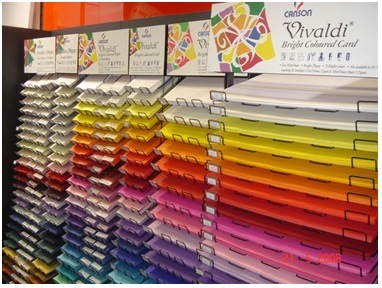
This image of a paper display in a newsagency tells a strong story about the fun and the variety of papers in store – making a statement that is relevant to any purchaser of art supplies: ‘we are in the paper business’.
A great VM idea captures attention
Consistent brand positioning makes your idea believable (authentic)
A strong story draws the customer in and persuades them to buy.
Succeeding at only one part dooms your efforts to failure, but the good news is that it is an easy fix.
Have fun
Dennis
(Free eBook on VM if you subscribe to the fortnightly newsletter.)