
Australia is often described as ‘the lucky country’, and one reason is its strong food security. With a population of about 28 million people, Australia has the capacity to produce enough food to feed its people. Food is essential to life, providing the nutrients the human body needs to stay healthy, including protein, carbohydrates, fats, vitamins, minerals and water. The Australian Government, recognising the importance of a secure food supply, has committed to developing a national strate
ategy and vision for a sustainable, resilient and secure food system that serves all Australians, from producers to consumers. A critical component of this system is the Australian food and agribusiness sector, which plays a vital role in producing, processing and delivering the food that reaches our plates.
In 2024-25, Australia’s food and agribusiness sector contributed $92.1 billion in industry gross value added, equivalent to 3.3 per cent of national GDP. The sector plays a dual role: feeding Australians and contributing significantly to the national economy.
The sector also comprises 174,938 businesses and employs about 455,000 people, with 62 per cent based in regional Australia. It consists of two interconnected parts: agriculture, which grows and produces raw materials, and the food-and-beverage industry, which transforms those inputs into the products consumers eat and drink.
The relationship between these two parts directly influences the safety, quality and nutritional value of food. For example, drought can increase grain protein and reduce starch, changing the baking and milling characteristics of flour. This can result in stronger, more elastic dough that absorbs more water, holds more gas and produces a chewier, higher-volume loaf.
Great expectations
Consumers are also shaping the food system, through the choices they make. With greater access to information, consumers are becoming more discerning and increasingly expect food products to be affordable, convenient and nutritious. This is driving demand for foods with clear nutritional benefits, functional ingredients, personalised nutrition solutions and transparent health claims.
Transparency across the food supply chain is now a major driver of consumer choice. Australians want to know where their food comes from, how it is produced, and its environmental and social impact. Trust in food safety, food labelling and supply-chain integrity remains critical. Recent concerns about country-of-origin labelling, product purity and food contents have reinforced the need for accurate information and stronger consumer confidence across the food system.
Sustainability is also reshaping expectations. The United Nations Sustainable Development Goals have placed sustainability at the centre of the global food agenda, with growing emphasis on ending poverty, protecting the planet and supporting peace and prosperity. For consumers, sustainability is no longer a point of difference. It is increasingly expected. Consumers are looking for products that reduce environmental impact, support responsible sourcing, minimise waste, embrace circular economy principles, and lower emissions.
Food security has also become a higher-profile issue. Climate change, geopolitical instability, supply-chain disruptions, and rising food costs are increasing consumer awareness of the need for resilient food systems. Consumers expect the food industry to balance sustainability with affordability, ensuring healthy and nutritious foods remain accessible to all. Meeting this challenge will require government, industry and researchers to work together to build a more secure, sustainable and resilient food future.
Reshaping the food system
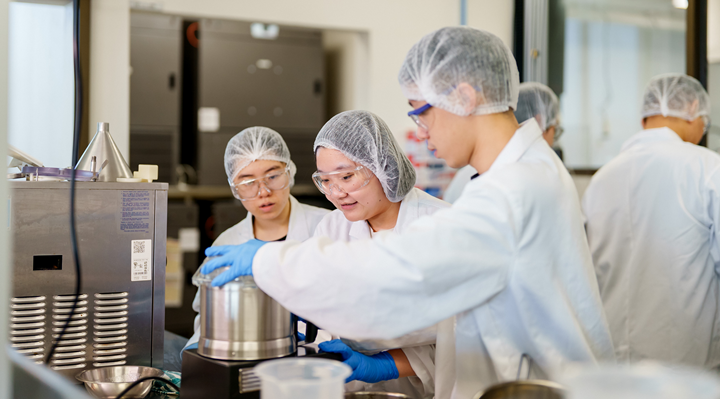
RMIT’s food technology and nutrition research has a multidisciplinary focus across the post-farm gate food value chain.
Researchers recently demonstrated the potential of this work by using high-power ultrasound and sieve filtration to extract valuable protein concentrates from discarded cauliflower leaves. The innovative technique broke down plant cell walls and achieved protein recovery rates of up to 47.32 per cent, showing how agricultural waste can be transformed into sustainable food ingredients.
With food manufacturing an important pillar of the government’s Feeding Australia initiative, academics are ready to work alongside industry, government and community partners to apply world-class knowledge and technology, unlock the potential of ingredients and food, and improve the health and wellbeing of people and communities in Australia and beyond.
Professor Mirjana Prica is the Director of RMIT’s Food Innovation Hub at the School of Science, STEM College, RMIT University.
Originally published in the October edition of Inside FMCG.


